TIME.
On the achievements, purpose, and frailty of our species.

Authors note: This is part one of a two part article. Read part one here.
It is time now to realize the nature of the universe to which you belong, and of that controlling power whose offspring you are; and to understand that your time has a limit set to it. Use it, then, to advance your enlightenment; for it will be gone, and never in your power again.
Marcus Aurelius, “Meditations”
The universe is a blast wave. It started with the big bang. It will likely end in heat-death, the gradual dissipation of all form and energy into a cloud of perfectly distributed elementary particles. The legacy of our existence will end in cold, infinite, stillness. Probably.
Barely out of its infancy, the resonating energy from the big bang produced life in our solar system after 13.8 billion years. The appearance of life, as we know and understand it, may be the most unlikely event in the observable universe - a process of the self-replication and proliferation of molecular structures that actually pushes complex information, in the form of DNA, forward through time. Our place in the process of the universal blast wave is early, almost imperceptible on the scale of the trillions upon trillions of years that the universe is projected to exist. Life itself, and especially humanity, is a flash in the pan of that timeline. We are a brief, unfathomably complex, and indescribably beautiful accident of physics.
Human beings are self-aware, deeply intelligent, and understandably selfish. Wrapped up in the trappings of our society and survival, we commonly forget our origins - not just our biological ancestry, but even before life, the process of replication began from the lifeless elements that make up our solar system. The adage that “we are all made of stardust” is true; from what was once dead arose that which we have become, for we are the universe come alive, curious and self-aware of its own existence, seeking knowledge to determine the secrets of its origin and composition. Like a toddler discovering herself in the mirror, the once lifeless matter begins to understand itself through our flawed, living eyes.
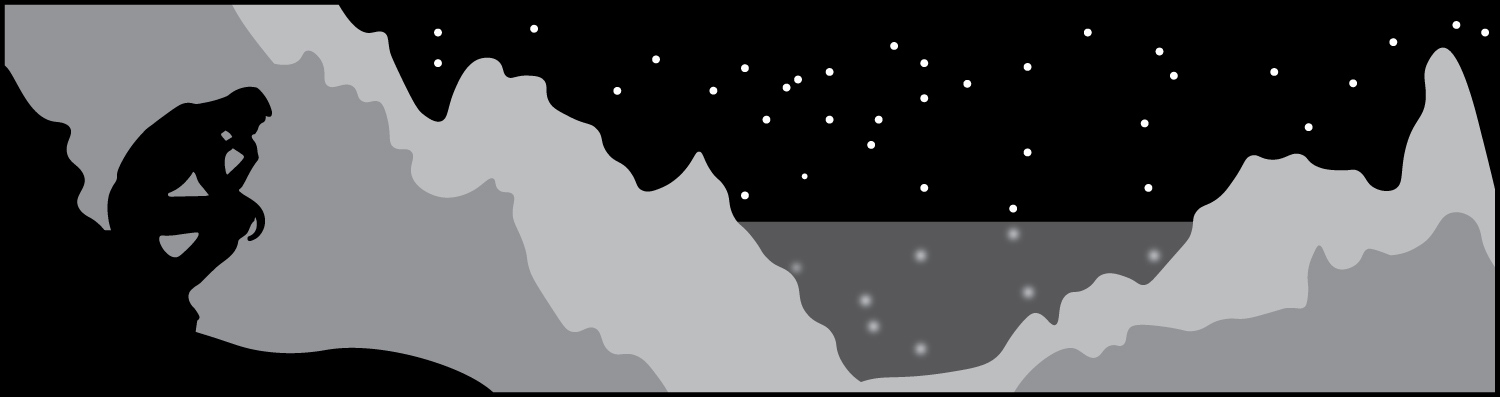
Through certain practices and habits, the human race has differentiated itself from other species. Using tools like spoken language and the written word, we have been able to accumulate and pass on knowledge to future generations.
My wife and philosophical companion, Dr. Alexandra Maccoll Garfinkel, has shared her thoughts with me on this. She describes that through this immortalization of ideas and discoveries, human beings have created and propagated a new form of evolving information akin to the DNA in our cells. This information can adapt, change, and diversify over time, but it differs from DNA in its relationship to evolution because it exists and continues to exist beyond the limits of the expiring biological form. Beyond us. To paper with pen, to hard drive with code… these things are not alive, and yet they carry the immortalized thoughts of life. She notes that this concept also begs the question: Is the lifespan of these records defined by the survival of life in the universe and by potential capacity for interpreting them?
This concept is the basis of our humanity. With every piece of knowledge that we protect and pass on, a later generation benefits, survives, and builds upon the knowledge. A powerful example is in horticulture - There are many who have died from eating poisonous plants, and many who did not die by the example of those who perished. Our food supply is built upon the sacrifice of the explorers and the knowledge and testimony of the survivors and benefactors of edible plants. The same is true for every aspect of our culture, built on cumulative knowledge that was originally passed by word and demonstration, from generation to generation. With the advent of written testimony, possibly the greatest invention in human history, the generational knowledge could finally outlive its human hosts, useful to future human beings as long as there is enough knowledge to decipher it. It is almost redundant to describe how bleak the future would be if we shun that knowledge, if we should burn those books, if we should damn our children with the hubris of our own opinions on discoverers long past. The cumulative knowledge of humanity is all that will outlive us, and it must survive.
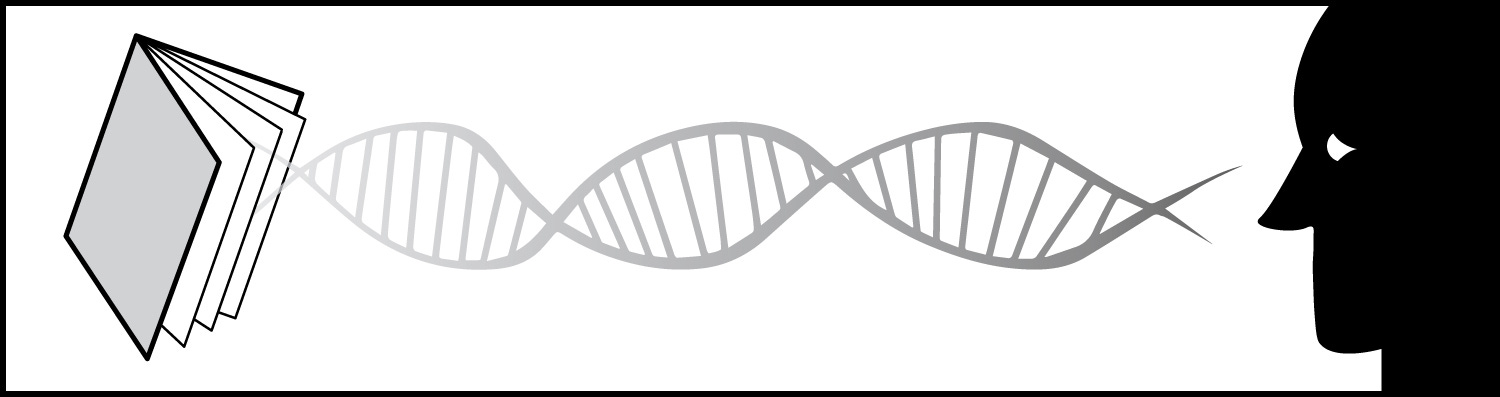
Thinking on this concept, I have come to realize that the sum of our knowledge, the vast accumulation of recorded human experience, is the paramount achievement of our species. The more we know about physics, biology, chemistry, philosophy, history, and the entire spectrum of cognitive exploration, the more the universe is literally understanding the machinations of its own complex existence. Keeping this vast concept in mind, I am able to derive a distinct and personal sense of morality and purpose that has transformed the way I live and make decisions in my life.
The expansion, proliferation, diversification, and protection of information, both genetic and knowledge-based, is the most important task that we can undertake as a species.
Every action that a human being takes can and should be attributable towards this goal. Those, like me, who are unable to directly contribute to the expansion of human knowledge have the ability to facilitate a world where others may succeed. Through this lens, our species, our knowledge, and the complexity of life itself may have the ability to sustainably expand, diversify, and thrive as it moves forward through time.
This is not to say that experiential pleasure, learning to be present in a moment, and genuinely enjoying the incredible reality that we live in is not important. To exist within a space as well as the vast context of time is an undertaking that must be done simultaneously, and with great passion. It is a skill to do both, and truly difficult to do them both well.
Inevitably, all of these complex structures - planets and stars, life, DNA, knowledge, your own consciousness, the very universe in which we exist within - all these things will die, and be lost to an eternity of darkness. Contextualizing our morality and purpose in the face of oblivion is humanity’s greatest challenge, as we learn to grapple with the incredible concept that defines us, drives us, and destroys us: Death.
For now, let’s keep discovering, learning, and teaching what we have uncovered. Let’s continue to build the incredible foundation of universal knowledge upon which our future generations will make their stand in an uncertain, indescribable future.